
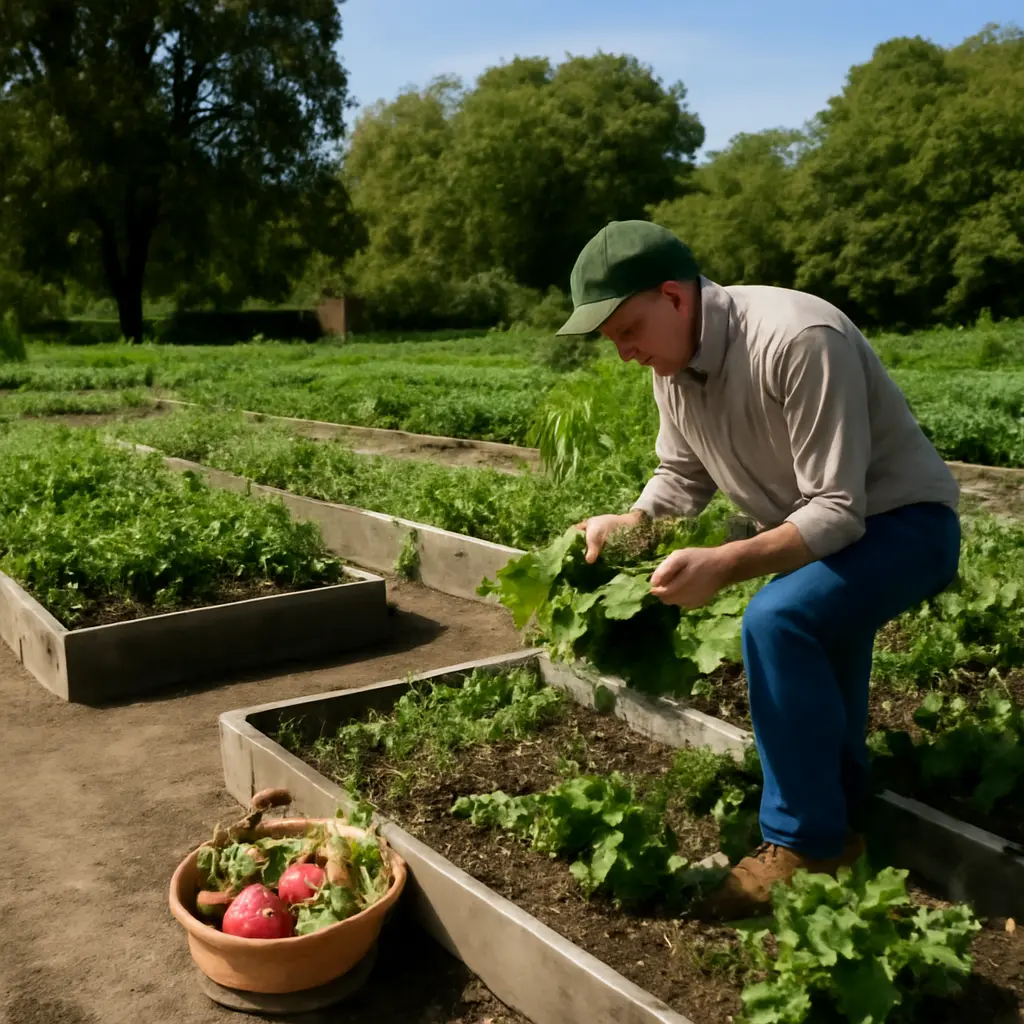
Sustainable pathways for families are practical ways to meet everyday needs while protecting health, resources, and future options—and they work best when they fit the rhythms of childcare, household chores, and seasonal harvests. The United Nations’ 2023 Sustainable Development Goals Report estimated that 2.3 billion people experienced moderate or severe food insecurity in 2022, underscoring why resilient food systems matter. For families, sustainability is less about adding an idealized set of tasks than coordinating food growing, cooking, care work, and community support around the time and energy actually available. This article explains how household-scale sustainability can be defined, organized around care and food cycles, supported by shared infrastructure, and evaluated without placing an unfair burden on caregivers.
Sustainable pathways balance household needs with ecological limits
A sustainable pathway is a sequence of choices and systems that helps people meet present needs while maintaining the ecological and social conditions that allow future generations to meet theirs. The widely used definition comes from the United Nations’ 1987 report Our Common Future, produced by the World Commission on Environment and Development. Applied to family life, that principle means assessing not only whether a garden, meal plan, or low-waste routine is environmentally beneficial, but also whether it is safe, affordable, equitable, and workable alongside paid work and caregiving.
The household is a useful place to make sustainability concrete, but it is not solely responsible for solving structural problems such as low wages, limited childcare, or inaccessible fresh food. The Food and Agriculture Organization of the United Nations has estimated that roughly one-third of food produced for human consumption is lost or wasted globally. Meanwhile, the United Nations Environment Programme’s Food Waste Index Report 2024 estimated that households generated 631 million tonnes of food waste in 2022—about 60% of the measured total at retail, food-service, and household levels. These figures make planning, storage, and sharing relevant, while also pointing to the need for better systems beyond individual kitchens.
Household sustainability connects food, care, time, and resources
Household sustainability describes practices that reduce avoidable resource use and support wellbeing without making daily life unmanageable. Its connected concepts include food security, energy and water conservation, waste prevention, health, and the distribution of unpaid care work. A routine that saves water but depends on one exhausted caregiver to maintain it is not resilient; a productive garden that displaces children’s play space or relies on unsafe tools is not a successful pathway either.
The International Labour Organization reported in its 2018 care-work analysis that women performed 76.2% of total unpaid care work globally and spent, on average, 3.2 times as many hours on it as men. The data are global rather than specific to every household, but they highlight a key design test: sustainable routines should distribute tasks fairly, match the time people have, and allow adjustments when illness, school schedules, or harvest peaks change the workload.
Resilience means adapting rather than following a perfect routine
Resilience is the ability of a household or community to keep essential functions going and adapt when conditions change. In practice, it can mean having backup meals, choosing crops that mature at different times, preserving surplus when time permits, and knowing where to find food or childcare support. Resilience is not self-sufficiency: shared tools, public services, local markets, and neighbors can be as important as what a family produces at home.
That distinction leads from the broad idea of sustainability to the daily challenge of coordinating care and work. When children, chores, and harvests overlap, a pathway succeeds not because every task is completed on schedule, but because the household has practical priorities and alternatives.
Care-centered planning makes sustainable pathways workable
Care-centered planning organizes household routines around people’s needs, capacities, and available time. It treats childcare, cooking, cleaning, rest, and food production as connected activities rather than competing obligations. The approach is consistent with the International Labour Organization’s framework for decent work and care: care is essential to wellbeing and the economy, yet its unpaid portion is often unevenly distributed and insufficiently supported.
The practical categories below—shared task planning, child-safe participation, and flexible routines—are related ways to apply that principle. They help families move from a sustainability goal to a manageable pattern of action.
Shared task planning distributes invisible work
Shared task planning makes recurring work visible and assigns responsibility rather than leaving one person to remember everything. A simple weekly check-in can identify school and work commitments, garden tasks that cannot wait, meals that need using up, and chores that can be postponed. Tasks can be divided by availability and ability, with children offered age-appropriate participation rather than responsibility for essential household outcomes.
For example, one adult might water containers before work while another handles dinner; older children could rinse vegetables or set the table, while younger children help match clean produce to storage containers. The point is not to make every contribution equal in duration, but to make expectations explicit and revise them when circumstances change. The ILO’s findings on unequal unpaid care work support treating task-sharing as a substantive sustainability issue, not merely a matter of personal preference.
Child-safe participation builds skills without adding risk
Child-safe participation means giving children useful, supervised ways to take part in food and household routines while protecting their health and development. Examples include washing sturdy produce, sowing large seeds, carrying light containers, or helping sort compostable scraps under adult supervision. Tasks should be appropriate to a child’s age and abilities; sharp tools, heavy loads, chemicals, hot surfaces, and unsafe water require adult control.
The Centers for Disease Control and Prevention advises that young children are at increased risk of serious illness from some foodborne pathogens. Its food-safety guidance emphasizes handwashing, clean surfaces, separating raw foods from ready-to-eat foods, and safe cooking and storage. In a family garden or kitchen, those basics matter as much as the learning opportunity: children should wash hands after soil contact, and adults should handle produce hygiene, knives, and preservation procedures.
Flexible routines protect rest and household capacity
A flexible routine distinguishes time-sensitive tasks from optional improvements. A plant may need watering during a hot spell; a pantry can be reorganized another day. Preparing a few dependable meals, keeping easy alternatives available, and choosing low-maintenance crops can reduce pressure during busy weeks. Families can also set a “minimum viable” routine—such as harvesting only what will be eaten soon—rather than treating a full harvest or elaborate preservation session as mandatory.
This matters because sustainability programs can fail when they assume unlimited unpaid time. The United Nations’ 2030 Agenda for Sustainable Development recognizes unpaid care and domestic work in Sustainable Development Goal 5.4, calling for its recognition and shared responsibility. At household level, that principle translates into protecting rest, asking for help, and accepting that some chores can wait.
Food-cycle design connects harvests to meals and storage
Food-cycle design links what a household grows or buys with what it can safely prepare, store, share, and eat. It includes crop selection, staggered harvesting, meal planning, preservation, and waste prevention. The U.S. Department of Agriculture’s guidance on food safety and home food preservation stresses that storage and preservation methods must be appropriate to the food; unsafe canning or prolonged storage can create serious hazards. Sustainable food routines therefore need to prioritize safety and realistic capacity over preserving every surplus item.
A harvest can arrive precisely when a family has the least time to process it. The most useful response is to plan for variability: grow manageable quantities, choose crops with different harvest windows, and decide in advance what to eat fresh, freeze, share, or leave unharvested. These practices connect the environmental goal of reducing waste to the everyday limits of labor, space, and equipment.
Staggered planting smooths peaks in household workload
Staggered planting means sowing a crop in several small batches over time instead of planting the entire supply at once. Where climate and crop type permit, this can spread both harvest volume and preparation work. Selecting varieties with different maturity dates, mixing quick-growing crops with longer-season plants, and avoiding more planting than the household can maintain are related techniques.
The exact planting schedule depends on local frost dates, heat, rainfall, and the crop; a universal statistic would be misleading. Local agricultural extension services and seed-packet maturity guidance are better references than a generic calendar. The broader planning principle is to fit the garden to the household’s available attention, not to maximize yield regardless of the labor required.
Meal planning and storage prevent avoidable food loss
Meal planning uses a household’s existing food and expected harvest to guide purchases and preparation. A short inventory of perishables, a “use first” shelf, and a flexible list of meals can help prevent forgotten produce from spoiling. The United Nations Environment Programme’s 2024 Food Waste Index identifies households as the largest measured source of food waste in 2022, with 631 million tonnes attributed to household waste globally. That estimate is not a measure of what any one family can prevent, but it illustrates the scale of the issue.
Storage should reflect the food: refrigerate foods that require refrigeration, keep raw meat separate from ready-to-eat items, and follow reliable guidance for freezing, drying, or canning. When there is more produce than the household can use safely, sharing promptly with neighbors or a community food program may be more practical than attempting an ambitious preservation project.
Community exchange turns surplus into shared resilience
Community exchange is the sharing of food, tools, knowledge, or labor among households and local organizations. A neighborhood produce table, community garden, seed library, or shared preserving session can reduce duplicated effort and help distribute seasonal abundance. These arrangements are most useful when participation is accessible, food-safety practices are clear, and people can contribute in different ways rather than being expected to volunteer a fixed amount of time.
The FAO’s work on food loss and waste emphasizes that prevention and redistribution can complement one another across food systems. At local scale, a household can contact a community garden, food bank, cooperative extension office, or mutual-aid group to learn what foods are accepted and how they should be handled. This leads from family-level routines to the wider infrastructure that makes sustainable choices possible.
Shared infrastructure makes sustainable pathways more equitable
Shared infrastructure includes public services, community spaces, reliable transport, affordable food outlets, water access, childcare, and local organizations that reduce the burden on individual households. It matters because families do not start with equal land, time, income, physical ability, or access to safe storage. A pathway that assumes a private yard, spare freezer, and flexible work schedule is not universally available.
The United Nations’ Sustainable Development Goals connect food security, health, decent work, gender equality, and sustainable consumption rather than treating them as isolated concerns. That systems view is important: household actions can contribute, but dependable services and fair working conditions determine whether those actions are feasible for more than a privileged minority.
Community gardens offer land, learning, and social connection
A community garden is a shared growing space where participants cultivate crops individually or collectively. It can provide access to land, practical knowledge, and social connection for people without private outdoor space. Its benefits depend on local conditions, including secure access to land, water, accessible paths, clear governance, and arrangements for maintenance during vacations or illness.
A garden can also reduce household workload when participants share tools, watering duties, and harvest distribution. For families with young children, shaded seating, safe paths, clean handwashing facilities, and flexible volunteer expectations can determine whether the space is genuinely usable. Local extension services and municipal garden programs can provide region-specific advice on soil testing, water use, and safe crop handling.
Childcare and food access shape who can participate
Childcare and food access are enabling conditions for sustainability, not separate topics. A family may value seasonal food or community growing yet be unable to participate if meetings conflict with work, transport is unavailable, or childcare is unaffordable. Programs can reduce these barriers through child-friendly schedules, accessible locations, translated information, take-home resources, and partnerships with schools or community organizations.
The ILO’s evidence on unpaid care work reinforces why participation should not depend on caregivers absorbing yet another commitment. A genuinely inclusive program asks who has time to attend, whose labor maintains the project, and whether benefits reach people who face the greatest constraints. That is a stronger measure of sustainability than counting garden beds or volunteer hours alone.
Local adaptation improves safety and long-term success
Local adaptation means choosing practices suited to a place’s climate, soil, water supply, housing, and food traditions. In some locations, container gardening or indoor herbs may be more practical than a large plot; in others, drought-tolerant crops and careful irrigation may be priorities. Soil testing is especially important where land may have a history of industrial use, and local public-health or agricultural authorities can advise whether raised beds or clean imported soil are appropriate.
A useful real-world model is a school or community garden that combines growing with nutrition education and shared maintenance. Its success should be assessed not only by harvest quantity but also by participation, safety, continuity during school breaks, and whether produce is actually used. Local evaluation makes it possible to improve a program without assuming that one design will work everywhere.
Evaluation keeps sustainable pathways realistic and fair
Evaluation is the process of checking whether a routine or program produces useful outcomes without creating unacceptable costs. For families, a small set of indicators can reveal whether a pathway is helping: meals prepared from food already available, produce lost to spoilage, time spent on chores, participation by household members, and whether routines remain safe and manageable during busy periods. Measures should be simple enough to maintain and should not turn family life into a performance audit.
A chart can make trade-offs visible: list each recurring task, who does it, how long it takes, and whether it is essential, seasonal, or optional. A second simple calendar can mark school holidays, expected harvest periods, and busy work weeks. These visual tools are more useful than a single “sustainability score” because they show where workload peaks and where support or redesign may be needed.
Time and workload are sustainability indicators
Time-use tracking records how much time household members spend on care, food work, and maintenance. A brief one-week log can expose hidden tasks such as planning, shopping, remembering, and cleaning. If a new practice consistently adds pressure to one person, the pathway may need to be simplified, shared, or replaced with a lower-labor option.
This measure connects directly to the ILO’s global findings on unequal unpaid care work. Local household observations are not interchangeable with global estimates, but they can help families identify an unfair division of labor and make practical changes. The aim is not to account for every minute indefinitely; it is to use a short assessment to improve the arrangement.
Food safety and wellbeing are non-negotiable outcomes
A sustainable routine must protect health as well as reduce waste. Families should use authoritative food-safety guidance for cleaning, refrigeration, cooking, and preservation, and should avoid home-canning methods that have not been tested by a reliable authority. Gardens also require attention to safe water, soil quality, handwashing, and appropriate supervision for children.
The Centers for Disease Control and Prevention and the U.S. Department of Agriculture provide practical food-safety and preservation guidance. Consulting these sources is especially important when preserving low-acid foods, serving young children or people with weakened immune systems, or using produce grown in unfamiliar soil. A small amount of safe, regularly used food is a better outcome than a large harvest that creates health risks or goes uneaten.
A resilient pathway includes permission to scale back
Scaling back is a planned adjustment that protects the household’s capacity when circumstances change. A family might pause new planting, switch to simpler meals, ask a neighbor to harvest produce, or let a low-priority chore wait. This is not failure; it is adaptive management—the same principle used in resilient systems to respond to new information and changing conditions.
The most durable pathway is usually a modest one that can be resumed after disruption. Start with one routine, such as planning two meals around existing food or assigning a shared watering schedule. Review what saved resources, what took too much time, and who carried the work. Then keep, change, or stop the practice based on evidence from everyday life.
Conclusion: sustainable pathways work when they fit real lives
Sustainable pathways connect ecological limits with care-centered planning, safe food cycles, shared infrastructure, and realistic evaluation. The central lesson is that children, chores, and harvests do not need to be managed through a perfect schedule. Families need routines that share work fairly, adapt to seasonal peaks, protect health and rest, and draw on community support where available.
The evidence on global food waste and unpaid care work shows why sustainability must address both resources and labor. Begin with one small change, such as a household task check-in, a “use first” food shelf, or staggered planting. Consult local agricultural extension and public-health guidance for region-specific advice, and advocate for community services that make sustainable choices accessible to all families.
Sources: World Commission on Environment and Development, Our Common Future, 1987, https://sustainabledevelopment.un.org/content/documents/5987our-common-future.pdf; United Nations, The Sustainable Development Goals Report 2023, https://unstats.un.org/sdgs/report/2023/; United Nations Environment Programme, Food Waste Index Report 2024, https://www.unep.org/resources/publication/food-waste-index-report-2024; Food and Agriculture Organization of the United Nations, Food Loss and Food Waste, https://www.fao.org/food-loss-and-food-waste/en/; International Labour Organization, Care Work and Care Jobs for the Future of Decent Work, 2018, https://www.ilo.org/global/publications/books/WCMS_633135/lang–en/index.htm; United Nations, Transforming Our World: The 2030 Agenda for Sustainable Development, https://sdgs.un.org/2030agenda; Centers for Disease Control and Prevention, Food Safety, https://www.cdc.gov/food-safety/; U.S. Department of Agriculture, National Center for Home Food Preservation, https://nchfp.uga.edu/