
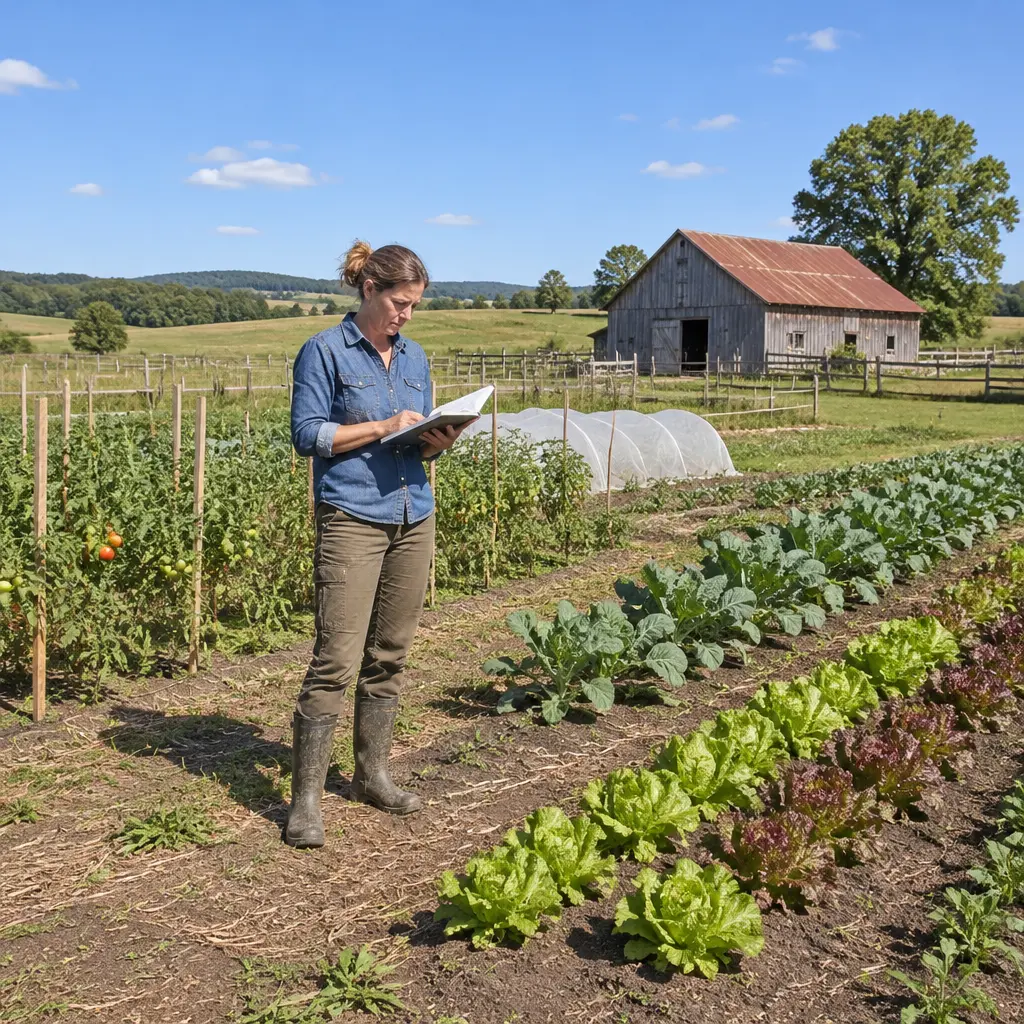
Agricultural passion is a strong interest in growing food, raising animals, or caring for land; agricultural work is the practical reality of making those activities fit a livelihood, a business, or a household. When passion and reality diverge, the gap may involve low or unpredictable income, demanding labor, debt, isolation, or limited control over land and markets. U.S. Department of Agriculture data show why that distinction matters: in 2022, 86% of U.S. farms were small family farms, and median farm income for that group was negative $900. Understanding the pressures behind the mismatch—and exploring options such as diversification, off-farm work, cooperative arrangements, and exit planning—can help people make choices that protect both their well-being and their relationship with agriculture.
Agricultural passion and the reality of farm life
There is no single formal definition of “agricultural passion.” Here, it means a personal commitment to agricultural activities or values—such as producing food, stewarding land, caring for livestock, or sustaining a rural community. The U.S. Department of Agriculture’s Economic Research Service (USDA ERS) defines farm businesses through operational and economic criteria, not through how much an operator loves the work. That difference is important: a vocation can be meaningful without being financially viable, and a profitable operation may still conflict with an individual’s desired lifestyle.
The mismatch is not a personal failing. Farming combines biological uncertainty with market exposure and high fixed costs. USDA ERS reported that family farms accounted for 97% of U.S. farms in 2022, while small family farms made up 86%. Yet the economic picture for small operations was often precarious: median farm income for small family farms was negative $900 that year. Farm households may rely on wages, savings, or other income alongside farm earnings, so gross sales alone do not tell the full story.
The difference between a calling and a workable livelihood
A calling describes why a person wants to farm; a workable livelihood describes whether the operation can consistently cover its costs and meet household needs. Those measures can diverge. Someone may find purpose in soil health, animal care, or feeding a community while facing volatile prices, weather losses, long hours, or insufficient access to land. The practical question is not simply whether farming is loved, but which parts of the work are sustainable financially, physically, and emotionally.
Why the mismatch matters
Ignoring a persistent gap can contribute to debt, exhaustion, family conflict, and delayed decisions about changing or leaving an operation. It can also obscure the value of a person’s agricultural skills: experience in machinery, logistics, animal health, food safety, or sales can transfer to other parts of the food system. Naming the problem early creates room to test alternatives before a crisis forces a decision.
Financial pressures reshape agricultural passion
Farm viability is the ability of an operation to sustain production and meet financial obligations over time. USDA ERS farm typology distinguishes farms by sales, operator occupation, and ownership structure; those categories help explain why “farm income” varies widely. A small farm may be central to a household’s identity but generate little net income, while a larger operation may have more revenue and much higher expenses and debt exposure. The figures below are indicators of structural pressure, not predictions for any individual farm.
Unpredictable revenue and thin margins
Farm revenue depends on yields, prices, input costs, and the timing of sales. A strong harvest does not automatically mean a strong financial year if fertilizer, fuel, feed, labor, interest, or transportation costs rise. USDA ERS’s 2022 farm typology estimates show the challenge for small family farms: their median farm income was negative $900. Because many farm households receive income from outside the operation, that figure should be read as farm-business income rather than total household income.
Debt, land, and the cost of entry
Land and equipment can require large, long-term investments, creating a difficult entry point for new farmers and a substantial repayment burden for existing operators. USDA’s 2022 Census of Agriculture counted about 1.9 million U.S. farms, 7% fewer than in 2017, while the average farm size rose to 463 acres from 444 acres. These figures describe a changing farm structure, not a simple cause-and-effect story, but they underscore that access to land and the scale needed to compete remain central concerns. Local land prices, rental terms, credit access, and commodity type make the experience differ substantially by region.
Ways to test financial changes
A farm budget can make the gap between aspiration and economics visible. Operators can compare enterprise-level revenue and costs, calculate break-even prices, review debt payments, and model a poor-yield or low-price year. Possible adjustments include changing the crop mix, reducing an unprofitable enterprise, leasing rather than buying equipment, adding direct sales, or retaining off-farm employment. Each option has trade-offs; direct marketing, for example, may improve the price received but add processing, compliance, delivery, and customer-service work.
Labor, health, and the lived experience of agriculture
The lived experience of farming includes the physical workload, schedule, hazards, social conditions, and mental demands of agricultural work. The U.S. Bureau of Labor Statistics reported that 2023 fatal-work-injury data recorded 417 deaths in the farming, fishing, and forestry occupational group. This broad category includes occupations beyond farm operators, but it demonstrates that agricultural work carries serious hazards. Passion may help people persist, but it does not remove risks or replace rest, training, protective equipment, and practical support.
Physical demands and safety
Farm work can involve machinery, animals, chemicals, heavy lifting, repetitive motion, heat, and long periods outdoors. Risk management includes equipment maintenance, machinery training, protective gear, safe chemical handling, and clear procedures for working alone or in extreme weather. Planning for safety is not a sign of weak commitment; it is part of keeping the people and skills an operation depends on.
Stress, uncertainty, and isolation
Financial uncertainty and responsibility for land, animals, employees, or family can make it difficult to disconnect from work. Rural distance and demanding seasonal schedules may also limit access to social support or professional care. The National Institute for Occupational Safety and Health identifies agriculture as a high-hazard sector and supports research and prevention efforts through its Centers for Agricultural Safety and Health. People experiencing sustained distress can speak with a health professional, a trusted adviser, or a farm-support organization; immediate danger warrants contacting local emergency services or a crisis resource.
Boundaries as a farm-management tool
Boundaries are practical rules that protect time, health, and decision-making capacity. Examples include arranging relief coverage, setting limits on work hours when possible, sharing responsibilities, and scheduling time away during lower-demand periods. These measures cannot eliminate seasonal peaks or emergencies, but they can reveal whether a business model depends on unsustainable labor. If the operation only works when someone is continually exhausted, that is meaningful information about its design.
Reconnecting values with a realistic agricultural path
Agricultural work is broader than owning and operating a farm. Someone who loves agriculture but dislikes the realities of a particular operation may be able to preserve the underlying values—food production, land stewardship, animal care, or rural service—in a different role. USDA’s National Agricultural Statistics Service census data and USDA ERS farm classifications offer context on the sector, while local extension services, farm business advisers, and workforce programs can help translate that context into decisions suited to a particular region and enterprise.
Diversification and shared approaches
Diversification means spreading income or risk across more than one product, market, or activity. It may involve adding a complementary crop, selling through a farmers market, supplying a restaurant, offering agritourism, or providing custom farm services. Cooperatives, equipment-sharing arrangements, and collaborative marketing can also help participants share costs or reach buyers. These strategies require careful attention to labor, insurance, food-safety rules, capital needs, and market demand; adding an enterprise without checking those requirements can increase strain rather than reduce it.
Off-farm employment and agricultural careers
Off-farm employment can stabilize household income, provide benefits, or reduce pressure to make the farm cover every expense. It may also mean less time available for farm work, so the arrangement needs to be evaluated honestly. Other agriculture-connected paths include extension and education, food processing, farm finance, conservation, equipment services, research, and supply-chain logistics. Moving to one of these roles does not erase agricultural experience; it may let a person contribute skills to the sector with a more suitable schedule or risk profile.
Changing direction without treating it as failure
A transition might mean resizing, leasing land, bringing in a partner, changing enterprises, transferring the farm to a successor, or leaving production agriculture. A written transition plan can set out finances, ownership, family expectations, timelines, and the future of land or livestock. The USDA Farm Service Agency and local agricultural extension offices can point producers toward relevant programs and planning support, although eligibility and availability vary. Making a deliberate change can preserve health, family relationships, and the values that originally drew someone to agriculture.
Conclusion: Make room for both passion and reality
Agricultural passion can sustain people through difficult work, but it cannot by itself guarantee a viable farm, safe working conditions, or a satisfying life. Small-farm income figures, changing farm structure, and occupational safety data show why the mismatch deserves practical attention. Start by identifying what matters most, reviewing the operation’s finances and workload, and discussing options with trusted family members and qualified advisers. Then consider whether a change in scale, enterprise, work arrangement, or career can preserve those values more sustainably. Agricultural commitment is not measured only by staying in one job or keeping one farm unchanged; sometimes the strongest choice is to reshape the work so that people can thrive.
Sources: U.S. Department of Agriculture, Economic Research Service, America’s Farms and Ranches at a Glance: 2023 Edition, https://www.ers.usda.gov/publications/pub-details?pubid=108798; U.S. Department of Agriculture, National Agricultural Statistics Service, 2022 Census of Agriculture, https://www.nass.usda.gov/Publications/AgCensus/2022/; U.S. Bureau of Labor Statistics, Census of Fatal Occupational Injuries, 2023, https://www.bls.gov/news.release/archives/cfoi_12172024.htm; National Institute for Occupational Safety and Health, Agriculture, Forestry and Fishing, https://www.cdc.gov/niosh/agriculture/about/index.html; U.S. Department of Agriculture, Farm Service Agency, https://www.fsa.usda.gov/