
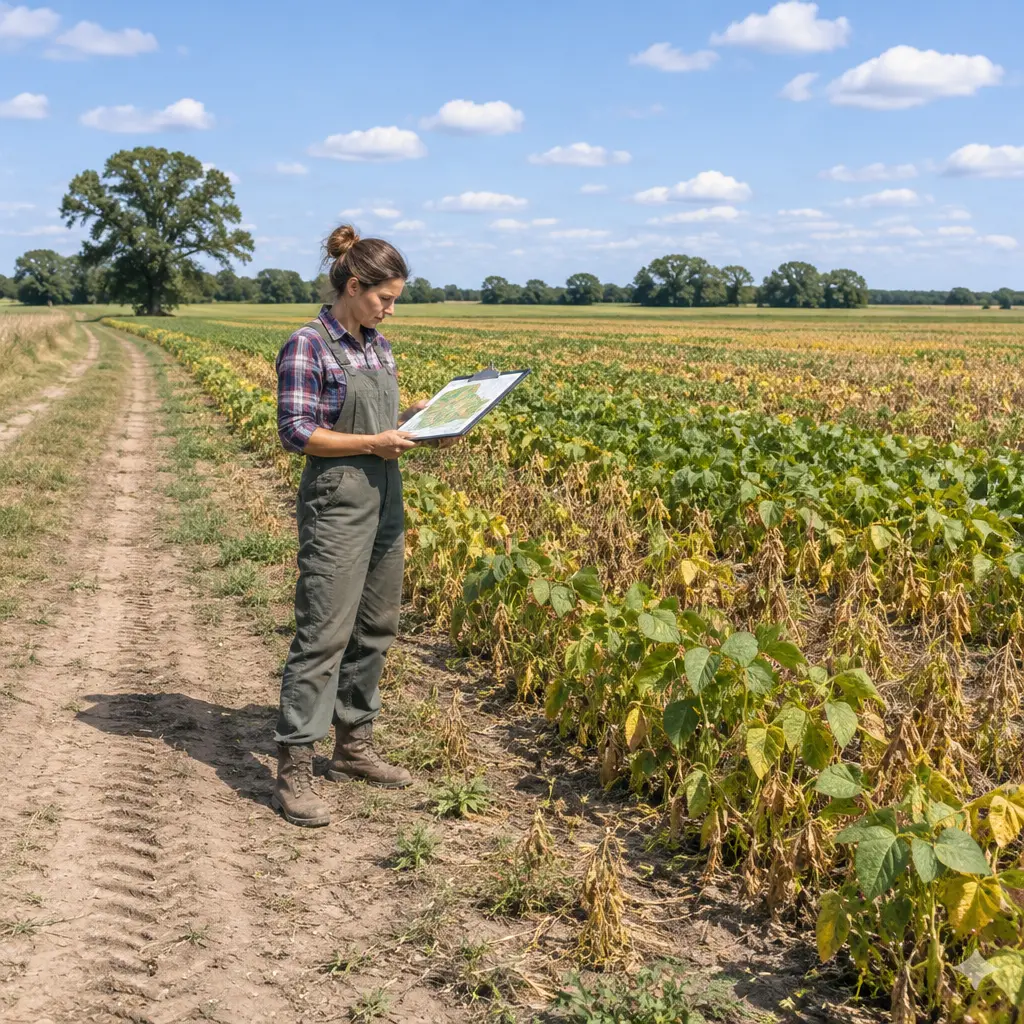
An agricultural plan is a farm’s working strategy for production, resources, finances, and risk; when weather, pests, prices, or equipment disrupt it, the best response is to stabilize the operation, assess losses, and revise decisions using current information. The U.S. Department of Agriculture’s (USDA) Risk Management Agency describes agricultural risk management as a combination of tools—including insurance, diversification, and marketing decisions—rather than a single fix. A practical bad-season response therefore starts with a damage and cash-flow review, moves to immediate crop and livestock decisions, and then considers insurance, government assistance, and next season’s adjustments. Acting promptly matters: the USDA’s 2022 Census of Agriculture counted more than 1.9 million U.S. farms, many of which depend on seasonal income and weather-sensitive production.
Respond to a Bad Season with a Farm Recovery Plan
A bad season does not always mean a total crop failure. It can include drought, flooding, frost, disease, pest pressure, input shortages, low commodity prices, or a combination of setbacks. The appropriate response depends on what has happened, what remains recoverable, and how long the farm can meet its obligations. The goal is to protect people, animals, soil, and essential cash flow while making evidence-based decisions about the current crop and the next production cycle.
The USDA National Agricultural Statistics Service reported that U.S. farms and ranches received $543.1 billion in cash receipts from marketings in 2022, illustrating the scale of the sector—but farm revenue is unevenly distributed and can fluctuate sharply between years. A written recovery plan helps turn a stressful season into a sequence of manageable decisions.
Assess Farm Losses Before Changing the Plan
A farm loss assessment is a documented estimate of damage, remaining production potential, and financial exposure. USDA extension programs commonly advise producers to keep timely records and consult qualified crop, livestock, and financial advisers before making irreversible decisions. The assessment should distinguish confirmed losses from estimates and identify what can still be protected or harvested.
Document damage and preserve evidence
Record affected fields, acreage, crop stage, symptoms, dates, weather conditions, and actions taken. Take geotagged photographs where possible, retain invoices and input records, and note conversations with insurers or agencies. For insured crops, contact the insurance agent promptly and follow policy requirements before destroying, grazing, replanting, or harvesting damaged acreage. Documentation can support claims and clarify later decisions.
Estimate what remains viable
A field that looks poor may still produce a harvest, while a visually healthy crop may have reduced yield potential. Use crop scouting, soil moisture observations, stand counts, disease identification, and local extension guidance to estimate likely outcomes. For livestock, assess feed inventories, water availability, animal condition, and the cost of maintaining the herd. Separate immediate safety concerns—such as unsafe water or heat stress—from decisions that can wait for better information.
Build a short-term cash-flow picture
List cash on hand, expected receipts, essential expenses, debt payments, and upcoming input costs. Rank expenses by their effect on safety and future earning capacity: animal care, critical repairs, labor, and inputs needed to protect viable acreage may take priority over discretionary purchases. The USDA Farm Service Agency recommends that producers experiencing financial difficulty communicate early with lenders and local offices to understand available options. Avoid assuming that a future insurance payment or assistance application will arrive by a particular date.
Protect Crops, Livestock, and Farm Resources
Once the damage is understood, recovery turns to triage: choosing actions that reduce further losses without spending more than the likely return. The right response differs by hazard. Drought may call for water allocation and feed planning; flooding may require drainage, contamination checks, and delayed field access; disease or pest outbreaks may require diagnosis and targeted controls.
Make crop decisions field by field
Avoid treating the whole farm as one unit. Compare the expected value of salvaging, replanting, harvesting early, using a crop for forage, or leaving a field fallow. Before replanting, check the remaining growing season, seed availability, soil conditions, insurance rules, and whether the new crop has a realistic market. Local university extension specialists can help interpret planting windows and crop-specific thresholds.
Where drought is involved, the U.S. Drought Monitor provides a weekly map of drought conditions, but field-level observations remain essential. A regional drought category is a planning signal, not a substitute for checking soil moisture, crop stage, and water access on the farm.
Prioritize livestock welfare and feed security
Livestock plans should protect access to clean water, appropriate shelter, and adequate nutrition. Calculate feed needs against supplies on hand, expected forage production, and delivery schedules. If feed is short, consult a veterinarian or livestock nutritionist before making major ration changes. Producers may need to compare purchasing feed, reducing herd numbers, or moving animals; each option has animal-welfare, transport, market, and cash-flow implications.
Prevent secondary damage to soil and infrastructure
After floods or heavy rainfall, avoid operating machinery on saturated soil when doing so would cause compaction or erosion. Check wells, irrigation systems, fences, grain storage, and electrical equipment for damage or contamination. After drought, protect remaining ground cover and plan residue management to limit wind erosion. The USDA Natural Resources Conservation Service offers technical guidance and conservation programs, although eligibility and assistance vary by location and program.
Use Insurance, Assistance, and Financial Tools
Risk-management tools can help bridge the gap between a bad harvest and a viable next season, but they have different eligibility rules, deadlines, and coverage. Crop insurance, disaster programs, lender arrangements, and conservation support should be treated as complementary possibilities—not guaranteed sources of immediate cash.
Review crop insurance and report losses promptly
The USDA Risk Management Agency administers federal crop insurance through approved providers. Coverage, reporting deadlines, and procedures depend on the policy and crop. Notify the agent as soon as damage is apparent, keep records, and ask before taking actions that might affect an adjuster’s inspection or the claim. Producers without federal crop insurance may want to ask the Farm Service Agency about relevant programs, including options that may apply to noninsured crops.
Ask about disaster programs and conservation support
The USDA Farm Service Agency administers several programs that may assist eligible producers after qualifying losses. Program names, funding, sign-up periods, and eligibility can change, so contact the county FSA office rather than relying on old announcements. The Natural Resources Conservation Service may also offer technical or financial assistance for practices that address resource damage or improve resilience. Keep receipts, production records, ownership or lease documents, and proof of loss organized for applications.
Talk with lenders and suppliers early
A lender may be able to discuss revised payment timing, operating credit, or other arrangements, but options depend on the farm’s circumstances and lender policies. Contact lenders before a missed payment where possible, bring an updated cash-flow forecast, and explain what is known and still uncertain. Similarly, speak with suppliers about delivery schedules and payment terms before placing orders the farm may not be able to meet.
Revise the Next Season’s Agricultural Plan
Recovery is not only about replacing lost production; it is also an opportunity to reduce the farm’s exposure to similar shocks. A revised plan should reflect the actual causes of the setback, the farm’s available capital and labor, and the limits of its land and water resources. Diversification can spread risk, but it should be matched to local markets, management capacity, and production costs.
Diversify crops, income, and markets where practical
Crop rotation, multiple varieties or planting dates, livestock-crop integration, and alternative market channels may reduce reliance on one crop, one harvest window, or one buyer. Diversification is not automatically profitable: new enterprises can require equipment, training, labor, and marketing. Compare expected margins and risk before committing, and consider a limited trial rather than a whole-farm conversion.
Invest in water, soil, and weather preparedness
Depending on local conditions, resilience measures may include improving irrigation efficiency, maintaining drainage, increasing soil organic matter, protecting ground cover, storing feed, or developing heat and emergency plans for livestock. The USDA Climate Hubs provide region-specific information on climate risks and adaptation practices. Select measures based on the farm’s limiting resource and calculate both upfront cost and expected benefit.
Use a simple scenario budget
Prepare at least three budgets for the next season: a normal case, a downside case, and a severe-stress case. For each, estimate yield, price, input costs, labor, debt obligations, and cash timing. This does not predict the weather or market; it identifies the point at which the farm would need to change acreage, delay purchases, secure credit, or seek additional advice.
A Practical Bad-Season Response Checklist
- Protect people, animals, and essential infrastructure first.
- Record damage and notify the crop-insurance agent or relevant agency promptly.
- Scout fields and livestock systematically; distinguish confirmed facts from estimates.
- Update cash-flow projections and identify expenses that cannot safely be delayed.
- Compare salvage, replanting, harvest, and livestock options before committing resources.
- Contact lenders, suppliers, extension advisers, and local USDA offices early.
- Review the season afterward and build a more resilient, financially realistic plan.
A useful visual for farm decision-making is a field-by-field table showing current condition, estimated yield, remaining costs, potential revenue, and the recommended action. A second chart can compare projected cash balances under normal, downside, and severe-loss scenarios. These simple tools make trade-offs visible to family members, employees, lenders, and advisers.
Conclusion: Turn a Bad Season into a Better-Informed Plan
When an agricultural plan meets a bad season, a disciplined response begins with loss assessment, moves to crop and livestock triage, and uses insurance, assistance, and financial conversations to protect the operation. The next season’s plan should address the specific vulnerabilities revealed by the setback through practical diversification, resource protection, and scenario budgeting. Start by documenting conditions and contacting the relevant insurer, lender, extension office, or USDA service center; early, accurate information gives a farm more options and helps turn a difficult season into a stronger recovery plan.
Sources: U.S. Department of Agriculture, 2022 Census of Agriculture, https://www.nass.usda.gov/Publications/AgCensus/2022/; U.S. Department of Agriculture, National Agricultural Statistics Service, Farm Income and Wealth Statistics, https://www.ers.usda.gov/data-products/farm-income-and-wealth-statistics/; U.S. Department of Agriculture, Risk Management Agency, https://www.rma.usda.gov/; U.S. Department of Agriculture, Farm Service Agency, https://www.fsa.usda.gov/; U.S. Department of Agriculture, Natural Resources Conservation Service, https://www.nrcs.usda.gov/; U.S. Drought Monitor, https://droughtmonitor.unl.edu/; U.S. Department of Agriculture, Climate Hubs, https://www.climatehubs.usda.gov/