
Working independently in agriculture means taking responsibility for assigned farm or ranch tasks without continuous supervision while recognizing when a decision, hazard, or equipment problem requires help. You may be ready when you can perform essential tasks safely and consistently, understand the limits of your authority, and communicate problems promptly—not simply when you have spent a certain number of hours on the job. That distinction matters in a sector where the U.S. Bureau of Labor Statistics reported 417 fatal work injuries in agriculture, forestry, fishing, and hunting in 2022. The practical signs are demonstrated skill, sound safety judgment, reliable work habits, and clear communication; the right level of independence also depends on the task, the worker’s training, and the risks involved.
Independent agricultural work requires demonstrated readiness
“Ready to work independently” is best understood as task-specific competence: a worker can complete a defined job to the required standard, without continuous direction, while following safety procedures and knowing when to stop and ask for support. It does not mean working alone in every circumstance or making decisions outside one’s training. The National Institute for Occupational Safety and Health (NIOSH) emphasizes that agriculture involves varied hazards—including machinery, animals, chemicals, and environmental conditions—so readiness for one task does not automatically establish readiness for another.
For example, someone may be able to irrigate a familiar field independently but still need direct instruction before operating a tractor, applying pesticides, handling livestock, or diagnosing a malfunction. Independence should therefore increase in steps: observe, practice with supervision, demonstrate competence, then take on a clearly defined task with an agreed way to check in.
Skill and task competence
Competence means performing the whole task correctly, not merely knowing its basic steps. A worker should understand the expected result, the sequence of work, relevant tools and materials, common mistakes, and how to verify completion. Depending on the job, that may mean checking a fence line, confirming irrigation flow, following a harvest-quality standard, or recording an animal’s condition accurately.
A useful test is whether the worker can explain the task, demonstrate it, notice when results are outside the expected range, and describe what they would do next. Employers and supervisors can validate readiness through observation and a checklist rather than relying on confidence or time served alone. The U.S. Department of Labor’s Occupational Safety and Health Administration (OSHA) recommends that employers provide workers with information and training about workplace hazards and safe work practices.
Safety judgment and hazard awareness
Safety judgment is the ability to recognize hazards, use required controls, and pause work when conditions change. Agricultural hazards can include moving machinery, power take-off shafts, uneven terrain, heat, confined spaces, animals, and chemical exposure. A worker who is ready for a task should know its specific risks, use required personal protective equipment, follow lockout or shutdown procedures where applicable, and understand how to summon help.
The scale of the risk makes this more than a formality. The U.S. Bureau of Labor Statistics recorded 417 fatal work injuries in agriculture, forestry, fishing, and hunting in 2022. That figure covers a broad industry group rather than farming alone, but it underscores why task-specific training and stop-work authority are central to responsible independence. New workers should never be expected to improvise around an unfamiliar machine, chemical, animal behavior, or emergency.
Reliability, records, and communication
Independent work also depends on dependable habits: arriving prepared, following instructions, protecting tools and materials, completing records, and reporting delays or mistakes early. In agriculture, small omissions can affect crop quality, animal care, food safety, or the next person’s work. Accurate notes may include dates, field locations, quantities, equipment checks, observations, or actions taken, according to the operation’s procedures.
A ready worker communicates before a problem becomes a crisis. They can give a concise update: what happened, where it happened, what they have already done, and whether anyone or anything is at immediate risk. Asking for clarification is a sign of sound judgment—not a failure of independence.
Readiness varies by agricultural task and risk
Agricultural independence has several forms, and each calls for different evidence of readiness. Routine fieldwork, livestock care, machinery operation, and chemical handling are not interchangeable categories: they involve different skills, hazards, and legal or workplace requirements. A sensible progression grants independence only within the boundaries of the demonstrated task.
Fieldwork and crop production
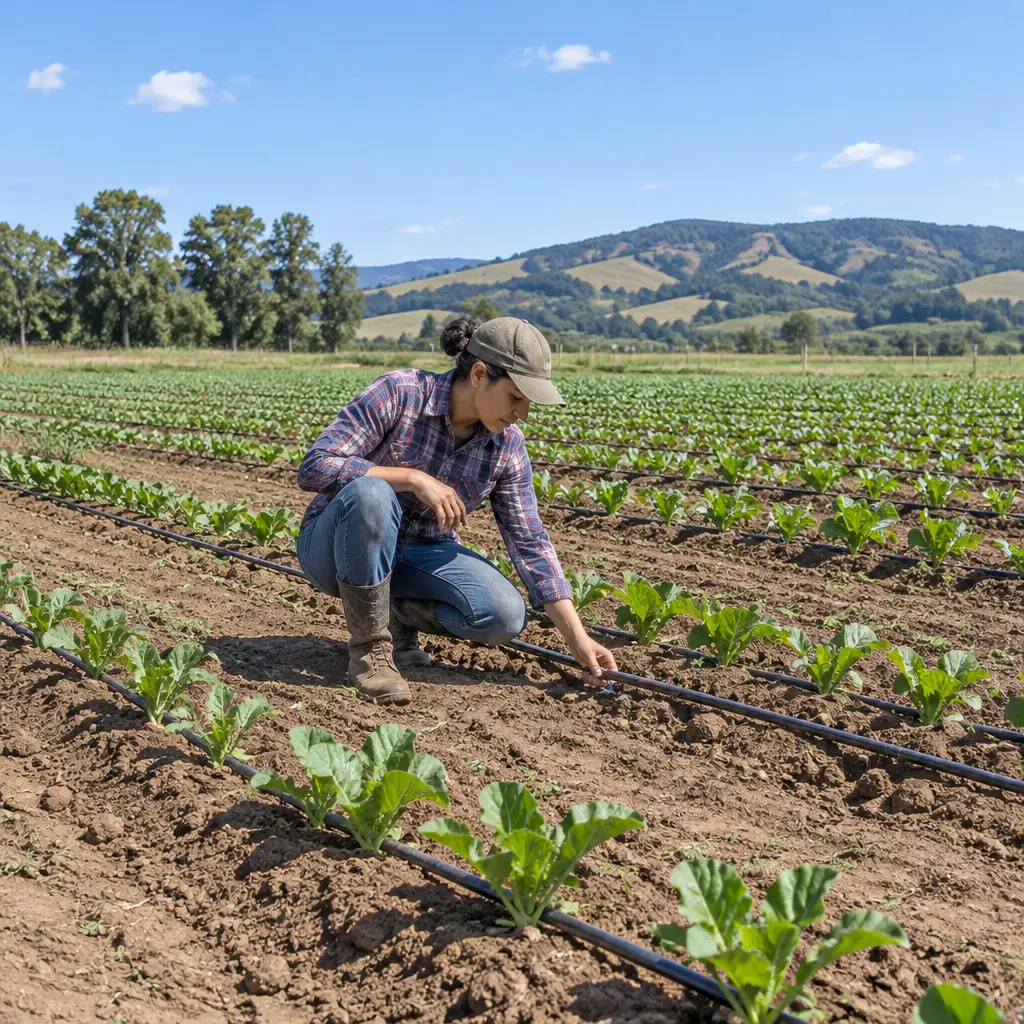
Routine crop tasks may include scouting, weeding, harvesting, irrigation checks, and basic maintenance. A worker may be ready to complete these without continuous supervision after correctly identifying the target area, meeting quality requirements, using tools safely, and recording or reporting relevant observations. The supervisor should specify what conditions require a call—for instance, unexpected crop damage, a blocked irrigation line, or a weather change that affects the work plan.
The Food and Agriculture Organization of the United Nations describes sustainable crop production as involving integrated decisions about resources, production practices, and environmental effects. On a practical level, this means independent workers need to follow the farm’s established instructions rather than make unapproved changes to inputs, irrigation schedules, or crop-protection methods.
Livestock care and animal handling
Livestock work requires the ability to follow feeding, watering, cleaning, and observation routines while treating animals calmly and recognizing abnormal behavior or signs of illness. Readiness also means understanding escape routes, gates, handling equipment, and the operation’s procedure for injured, aggressive, or distressed animals. A worker may be qualified to perform routine care yet not be authorized to treat an animal or handle a high-risk situation.
The U.S. Department of Agriculture’s Animal and Plant Health Inspection Service frames animal welfare around appropriate care and handling. On an individual operation, the relevant standard is the farm’s training and veterinary guidance: workers should know what they may do, what they must record, and whom to contact when an animal’s condition changes.
Machinery, vehicles, and equipment
Operating a tractor, harvester, loader, or other powered equipment independently requires more than basic familiarity. The worker should have task-specific training, understand controls and safety features, complete required pre-use checks, follow rules for passengers and bystanders, and know how to shut down and report a fault. Terrain, attachments, visibility, and the presence of people nearby can change the risk, so authorization should identify which machine and conditions are covered.
OSHA’s agricultural safety guidance addresses machinery hazards such as guarding and safe operation. A practical readiness check is a supervised demonstration followed by a discussion of abnormal conditions: for example, what to do if a guard is missing, a warning light appears, or the equipment behaves unexpectedly. If the answer is unclear, the task is not ready for unsupervised operation.
Pesticides and other regulated tasks
Chemical application is a distinct responsibility, not simply another field task. Workers must follow the product label and applicable training, certification, and workplace rules. In the United States, the Environmental Protection Agency’s Worker Protection Standard establishes protections for agricultural workers and pesticide handlers, including requirements related to training, notification, and protection from exposure. Applicator certification requirements can also vary by state and by the pesticide’s classification.
A worker should not independently mix, apply, or handle a pesticide unless the operation has confirmed that the worker is trained and legally authorized for that activity. When in doubt, pause and consult the supervisor or designated safety lead; a general claim of farm experience is not a substitute for required qualifications.
A practical way to confirm readiness
Readiness is easier to assess when a supervisor and worker agree on a clear standard before the task begins. A short trial period can reveal whether the worker can perform consistently, respond to changing conditions, and communicate at the expected points. The aim is not to remove oversight altogether, but to replace constant direction with suitable check-ins and clear limits.
Use an observe–practice–demonstrate progression
First, the worker observes an experienced person completing the task and asks questions. Next, the worker practices with direct supervision. Then the worker demonstrates the task while the supervisor checks key steps and safety decisions. Only after that should the worker take responsibility for the defined task, with a clear method for reporting concerns.
This progression is useful for routine and higher-risk work alike, but it does not replace formal instruction, licensing, certification, or legal requirements. It also creates a record of what the worker has actually demonstrated rather than relying on assumptions.
Agree on boundaries and escalation points
Before independent work starts, define the task, location, expected result, time frame, equipment allowed, and decisions the worker may make. Identify stop-work triggers such as injury, equipment failure, an unfamiliar chemical, an animal emergency, severe weather, or work conditions outside the training received. Agree on whom to contact and how, especially where mobile coverage is unreliable.
This is especially important for seasonal and young workers. The U.S. Department of Labor notes that federal child labor rules restrict certain hazardous agricultural occupations for workers under 16, subject to specific exceptions. Employers should check applicable federal and state rules before assigning young workers, and should not treat informal experience as permission to perform prohibited or restricted work.
Review performance and expand responsibility gradually
After the first independent shifts, review quality, safety, time management, recordkeeping, and communication. Discuss any errors as opportunities to correct the process and clarify training needs. If a task changes—for example, new equipment, a different chemical, unfamiliar terrain, or a more difficult animal-handling situation—reassess readiness rather than assuming prior approval still applies.
A simple readiness checklist can ask: Can the worker explain the task? Demonstrate it safely? Recognize abnormal conditions? Follow the operation’s quality standard? Keep required records? Contact the right person when needed? A “no” or “not sure” is a reason for more training or closer supervision, not a reason to take a gamble.
Conclusion: independence is earned task by task
A worker is ready to work independently in agriculture when they have demonstrated the skills, safety judgment, reliability, and communication required for a specific job. Readiness differs between crop work, livestock care, machinery operation, and regulated chemical handling, and it must be reassessed when the task or conditions change. The industry’s documented fatal injury burden reinforces the importance of training, clear boundaries, and knowing when to stop.
Workers can prepare by asking for a supervised demonstration and a clear list of responsibilities; farm owners and supervisors can use task checklists, documented training, and planned check-ins. Consult OSHA, NIOSH, the Environmental Protection Agency, and the U.S. Department of Labor for guidance relevant to the specific work and jurisdiction. Responsible independence is not working without help—it is knowing how to do the job well and when help is essential.
Sources: U.S. Bureau of Labor Statistics, Census of Fatal Occupational Injuries, 2022, https://www.bls.gov/iif/fatal-injuries-tables/; National Institute for Occupational Safety and Health, Agriculture, Forestry, and Fishing, https://www.cdc.gov/niosh/agriculture/; Occupational Safety and Health Administration, Agriculture, https://www.osha.gov/agricultural-operations; Food and Agriculture Organization of the United Nations, Sustainable Crop Production, https://www.fao.org/sustainability/news/detail/en/c/1274219/; U.S. Department of Agriculture, Animal and Plant Health Inspection Service, Animal Welfare, https://www.aphis.usda.gov/animal-welfare; U.S. Environmental Protection Agency, Agricultural Worker Protection Standard, https://www.epa.gov/pesticide-worker-safety/agricultural-worker-protection-standard-wps; U.S. Department of Labor, YouthRules! Agricultural Employment, https://www.dol.gov/agencies/whd/YouthRules/young-workers/agriculture