
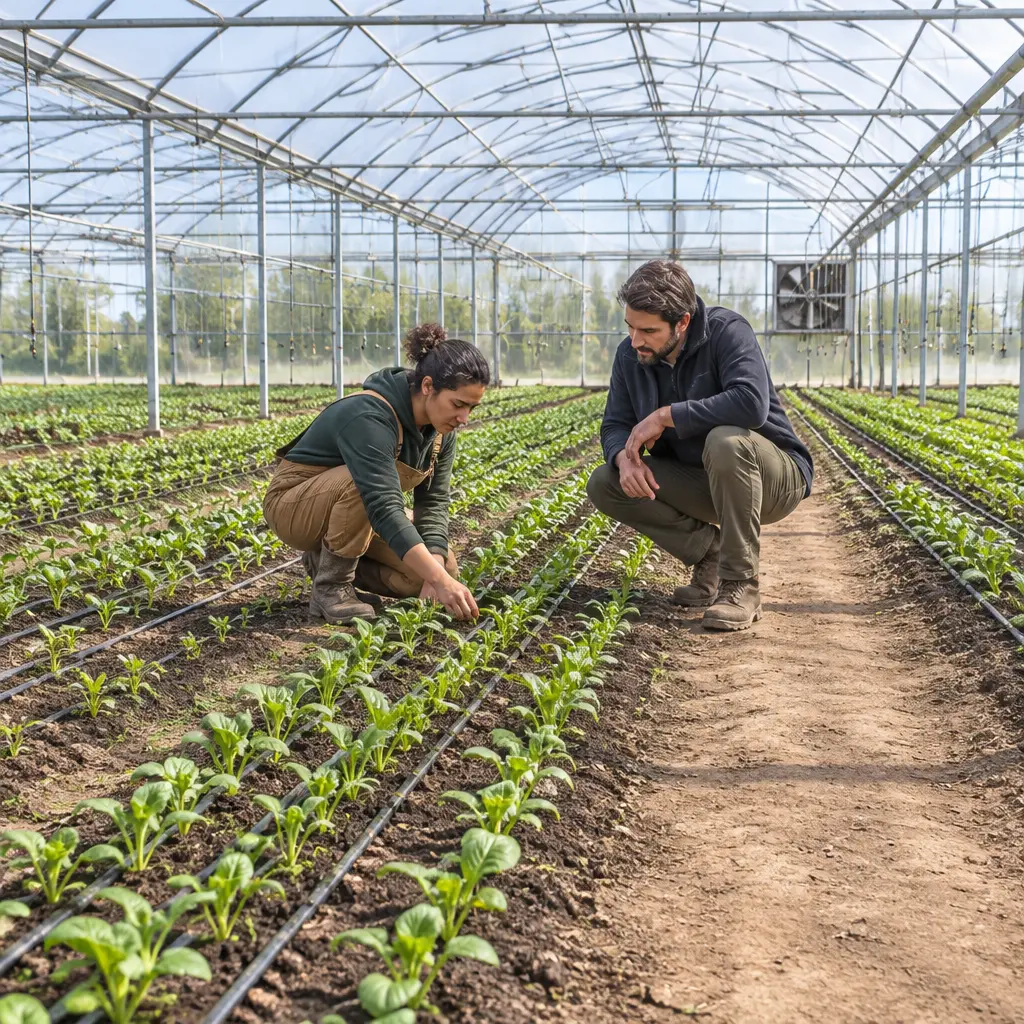
Entry-level farm roles that teach while you earn are paid jobs where beginners build practical agricultural skills through supervised, on-the-job experience. They include farmworker, greenhouse, livestock, equipment, and produce-packing positions. The U.S. Bureau of Labor Statistics reports that agricultural workers typically learn on the job, while its May 2024 data put the median annual wage for agricultural workers at $35,980. Pay, training, benefits, and season length vary widely, so comparing employers and asking specific questions matters. This guide explains what these roles teach, which kinds of jobs to consider, how to evaluate training and compensation, and where to find opportunities.
Paid farm work builds skills through supervised, practical training
A paid entry-level farm role is an agricultural job open to people with limited experience, in which routine work and instruction help employees develop skills. The Bureau of Labor Statistics describes agricultural workers as performing tasks such as planting, harvesting, feeding and caring for livestock, and maintaining farm facilities. It also notes that workers generally learn through short-term on-the-job training rather than requiring a formal credential for many positions.
That learning can be valuable because farm work brings together practical skills, safety judgment, teamwork, and knowledge of living systems. The U.S. Department of Agriculture’s 2022 Census of Agriculture counted 1.9 million farms and ranches in the United States, reflecting the variety of settings in which agricultural work takes place. A large crop operation, a dairy, a greenhouse, and a small diversified farm may offer very different duties and training.
What “learn while you earn” means
“Learn while you earn” is a practical description, not a guarantee of a formal apprenticeship or a credential. In a strong job, an experienced worker demonstrates a task, explains safe procedures, observes the new employee practicing, and gives feedback. Training might cover transplanting, irrigation, animal handling, sanitation, equipment checks, or harvest quality standards.
The distinction matters: a paid job may teach useful skills without offering a set curriculum, promotion pathway, or recognized qualification. Before accepting, ask who will train you, how much paid training is provided, and what responsibilities you can expect to take on as you gain experience.
Pay, seasonality, and working conditions
The Bureau of Labor Statistics reported a median annual wage of $35,980 for agricultural workers in May 2024. That national figure is a broad benchmark—not a promise of what a beginner will earn. Actual pay depends on location, crop or livestock type, experience, hours, and whether the job is seasonal, piece-rate, or year-round. The same occupation may include outdoor work in heat or cold, repetitive tasks, early starts, and periods of intense seasonal demand.
Ask whether the position is hourly or paid by output, how overtime is handled, what the expected schedule is, and whether housing or transportation is provided. Get the terms in writing and check applicable federal and state wage, safety, and employment rules. Farm jobs differ, and not every role or employer is covered by identical requirements.
Common entry-level farm roles teach distinct skill sets
The best starting role depends on what you want to learn. Crop production, greenhouse work, livestock care, equipment support, and post-harvest handling all provide entry points, but their day-to-day tasks and physical demands differ. Exploring these related job types helps applicants match their interests to a realistic training opportunity.
Crop and field worker
Crop and field workers help prepare soil, plant and maintain crops, control weeds, irrigate, and harvest produce. Beginners may learn to identify crop stages, use hand tools, follow field sanitation practices, and recognize when plants show signs of stress. On larger farms, duties can be specialized; on smaller farms, workers may rotate among several tasks.
This work can be physically demanding and weather-exposed. Ask about the crop calendar, work pace, equipment provided, breaks, and whether training includes safe lifting and tool use. The Bureau of Labor Statistics identifies crop, nursery, and greenhouse work among the areas in which agricultural workers are employed.
Greenhouse and nursery assistant
Greenhouse and nursery assistants care for seedlings and plants in controlled or partially controlled environments. Typical tasks include seeding, potting, watering, pruning, monitoring pests, and preparing plants for sale or transplanting. The setting can make it easier to observe how light, moisture, temperature, and nutrients affect growth.
A beginner may also learn inventory, labeling, sanitation, and basic irrigation routines. Ask whether the job includes instruction in plant identification and pest monitoring, or is mainly repetitive potting and moving. Greenhouse work can still involve heat, wet floors, repetitive motion, and lifting.
Livestock and dairy assistant
Livestock assistants support daily animal care, which can include feeding, cleaning pens, checking water, moving animals, and reporting changes in behavior or health. Dairy roles may include milking-related routines, equipment sanitation, and maintaining clean animal areas. These jobs teach observation, consistent care, hygiene, and safe movement around animals.
Animal work carries particular safety responsibilities. Ask what training is provided in animal handling, biosecurity, sanitation, and emergency procedures, and whether new employees are supervised before working independently. The Bureau of Labor Statistics notes that agricultural workers may care for animals and maintain their living areas; duties and risk levels vary by operation.
Farm equipment and irrigation helper
An equipment or irrigation helper may assist with cleaning, inspections, hose and line setup, minor maintenance, and preparing machinery for field work. These duties can introduce basic mechanical troubleshooting, water delivery, and preventive maintenance. Some employers require experience or qualifications before workers operate particular machines, so do not assume that an entry-level title includes equipment-operation training.
Ask which machines you may use, what instruction and supervision are required, and whether the employer provides personal protective equipment. Safe training should come before independent operation, especially around tractors, powered equipment, chemicals, and pressurized systems.
Harvest, packing, and post-harvest worker
Harvest and packing workers pick, sort, grade, wash, pack, or prepare crops for storage and shipment. They can learn how product quality is assessed, how harvest timing affects freshness, and how careful handling reduces damage and waste. Packing jobs may be indoors, outdoors, or split between field and facility work.
This role suits people interested in food handling and supply chains as well as crop production. Ask about sanitation procedures, pace expectations, lifting requirements, and whether work continues after the harvest peak.
A good first farm job pairs instruction with safe, fair work
A job can be paid and still offer little structured learning. To judge its value, look beyond the job title: confirm the wage and schedule, find out how supervision works, and identify the skills you are likely to practice. The Occupational Safety and Health Administration emphasizes that agricultural work can involve hazards such as machinery, animals, chemicals, and heat, making job-specific safety instruction an essential part of a responsible workplace.
Questions to ask before accepting
- What is the hourly wage or other pay arrangement, and how often are employees paid?
- What are the expected start and end dates, usual weekly hours, and busiest periods?
- Who will train and supervise me, and is training time paid?
- Which tools, machines, animals, or chemicals will I work around?
- What safety instruction, protective equipment, and emergency procedures are provided?
- Are housing, meals, transportation, or other benefits available, and what do they cost?
- Can workers move into more advanced duties or return for another season?
How to assess the learning opportunity
Look for clear demonstrations, opportunities to practice, regular feedback, and increasing responsibility tied to demonstrated competence. A useful training plan might progress from tool identification and supervised task practice to independent routine work and, later, more specialized duties. Ask for examples of what previous new hires learned or where they moved next.
Be cautious if an employer cannot explain pay, expects unsafe work without instruction, or pressures applicants to accept unclear deductions or housing terms. For migrant and seasonal agricultural workers, the U.S. Department of Labor’s Employment and Training Administration provides information about worker protections and the National Farmworker Jobs Program. Applicants can also consult their state labor agency for local rules and resources.
Finding and preparing for paid beginner farm work
Entry-level openings may be advertised directly by farms, through state workforce agencies, agricultural colleges, community organizations, farm job boards, and seasonal hiring programs. The National Farmworker Jobs Program, administered by the U.S. Department of Labor, supports eligible farmworkers through services that can include training and employment assistance. Availability and eligibility depend on location and individual circumstances.
Search with specific job terms
Search by location and task as well as by the broad phrase “farm worker.” Useful terms include greenhouse assistant, harvest crew, livestock caretaker, dairy assistant, irrigation helper, nursery worker, and produce packer. When contacting a farm, mention relevant experience such as gardening, physical work, animal care, food handling, or operating tools; transferable experience can help even without a farm-work history.
Prepare for the physical and practical demands
Read the job description carefully and ask about outdoor exposure, lifting, repetitive motions, footwear, and transportation. Bring questions about training and safety to the interview. A brief record of tasks learned—such as irrigation setup, crop scouting, animal-care routines, or packing standards—can help you describe your progress and strengthen future applications.
If you are considering a longer-term agricultural career, compare a farm job with structured options such as registered apprenticeships, extension courses, community-college programs, and employer-sponsored credentials. A first job can provide valuable experience, but formal training may be more appropriate for goals involving specialized machinery, crop advising, veterinary support, or farm management.
Conclusion: choose a role that pays fairly and teaches deliberately
Entry-level farm roles can offer a practical route into agriculture without requiring extensive prior experience. Crop, greenhouse, livestock, equipment, and packing positions each build different skills, while national wage data provide only a starting point for comparing local offers. The strongest opportunity combines clear pay and scheduling with attentive supervision, useful instruction, and appropriate safety practices.
Before accepting, confirm the terms, ask what you will learn, and check whether the employer’s training matches your goals. For further guidance, explore Bureau of Labor Statistics occupation profiles, OSHA agricultural safety information, state workforce services, and the U.S. Department of Labor’s farmworker employment resources.
Sources: U.S. Bureau of Labor Statistics, Agricultural Workers, Occupational Outlook Handbook, https://www.bls.gov/ooh/farming-fishing-and-forestry/agricultural-workers.htm; U.S. Bureau of Labor Statistics, Occupational Employment and Wage Statistics, May 2024, https://www.bls.gov/oes/; U.S. Department of Agriculture, 2022 Census of Agriculture, https://www.nass.usda.gov/Publications/AgCensus/2022/; Occupational Safety and Health Administration, Agricultural Operations, https://www.osha.gov/agricultural-operations; U.S. Department of Labor, National Farmworker Jobs Program, https://www.dol.gov/agencies/eta/agriculture